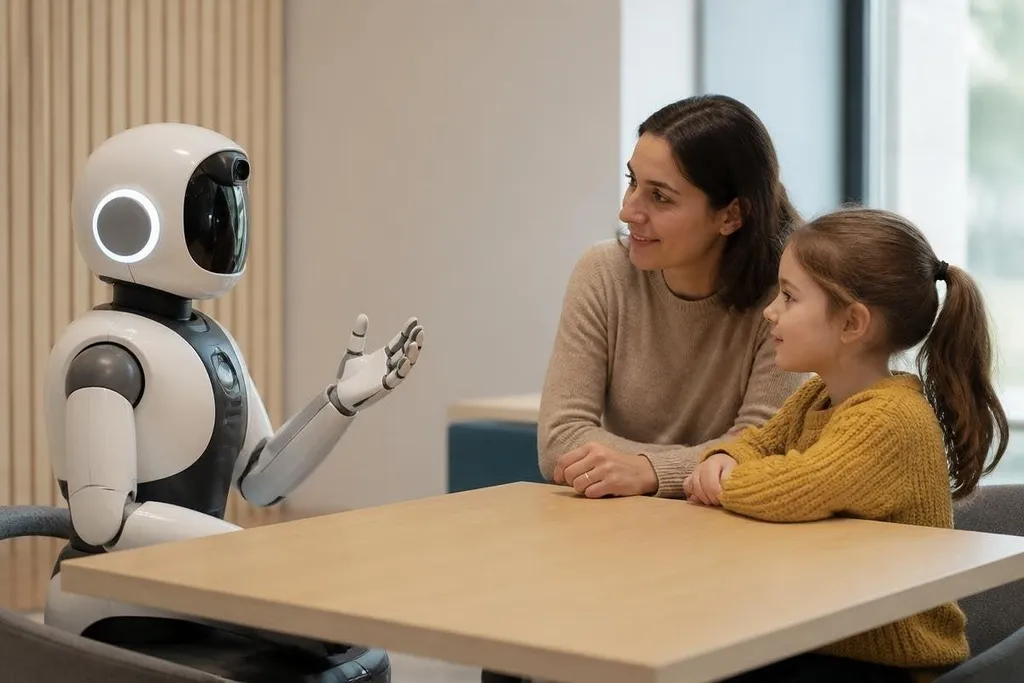
A social robot speaks, listens, moves, or displays expressions to interact with people. That can help in places such as schools, clinics, shops, and homes, but the same features can create privacy, safety, and trust problems.
This guide looks at what social robots can do, where they can fail, and what to check before putting one near the public.
- Social robots can repeat guidance, answer set questions, and direct people to the next step.
- Cameras, microphones, cloud services, and stored conversation data create privacy questions.
- A human needs to handle safety decisions, sensitive requests, and unclear behavior.
Where social robots help
A social robot can repeat the same message without tiring. At a reception desk, it might explain where to wait or direct a visitor to a room.
In a classroom, it could run a practice task that gives students another chance after an error. That repeatable role matters when staff need to answer the same basic questions many times. The robot can handle a narrow task, leaving a person free to deal with a request that needs judgment, care, or authority.
These systems can also give people a visible way to ask for help. A screen, speaker, or moving head can show which part of the system is active. The benefit depends on clear limits: the robot needs to say when it doesn't understand and pass the conversation to a person.
Once a social robot enters a public space, its sensors affect people who never agreed to take part. Robot24.com reporting on social robots can tie claims about cameras, microphones, and data use to a named machine, site, and date.
The risks start with the sensors
Most social robots need sensors to hear, see, or detect movement. A microphone may pick up people who never agreed to speak with the robot. A camera may record bystanders. A cloud connection may send that data outside the building.
The buyer needs clear answers before installation. What does the robot record? Where is the data stored? How long does the company keep it? Who can view it, and can the operator delete it?
The robot's appearance creates another risk. People may treat a speaking machine as more aware or caring than it is. That can matter in a care setting, where a person may disclose private information or expect help during a crisis.
The system should identify itself as a machine. It should state what it can do, what it cannot do, and when a human will take over. Friendly behavior must not hide the system's limits.
Safety and failure cases
Movement adds physical risk. A mobile robot can block a doorway, roll into a person, or react badly when someone steps into its path. An arm or moving head can pinch fingers if its speed, force, and stopping behavior are poorly set.
The safest design gives people a clear way to stop the robot. Staff also need a known restart process, a safe place to park it, and a record of faults. These details matter more than a polished voice or a lifelike face.
Failure can happen without touching anyone. It may mishear a name, give an old instruction, or answer a question outside its assigned task. A human check keeps a small language error from becoming a medical, financial, or safety decision.
I’d treat a social robot as a public-facing computer with motors, not as a digital person.
A buying checklist
Use this list before a trial or purchase:
- Name the job: Write the single task the robot must perform and the result that counts as success.
- Map the data: List every sensor, storage location, cloud service, and person who can view the records.
- Test handoff: Ask staff to take over during a confused, private, or urgent conversation.
- Check movement: Run tests near doorways, seated people, children, and people using mobility aids.
- Set a stop plan: Mark the emergency stop, parking area, restart steps, and person in charge.
- Review the exit: Confirm how to remove the robot, delete its data, and end the contract.
A small trial should measure more than conversation quality. Record how often people need human help, how often the robot gives a wrong answer, and how staff handle faults. Those records show if the robot reduces work or adds another screen to manage.
The useful social robot has a narrow job, visible limits, and a human ready to step in. Until a supplier can show those three things in the place where you plan to use it, keep the trial small and keep sensitive decisions with people.